Ali LeRoi: Everybody Hates Exhibitions
Apr 2, 2026 – Jun 11, 2026
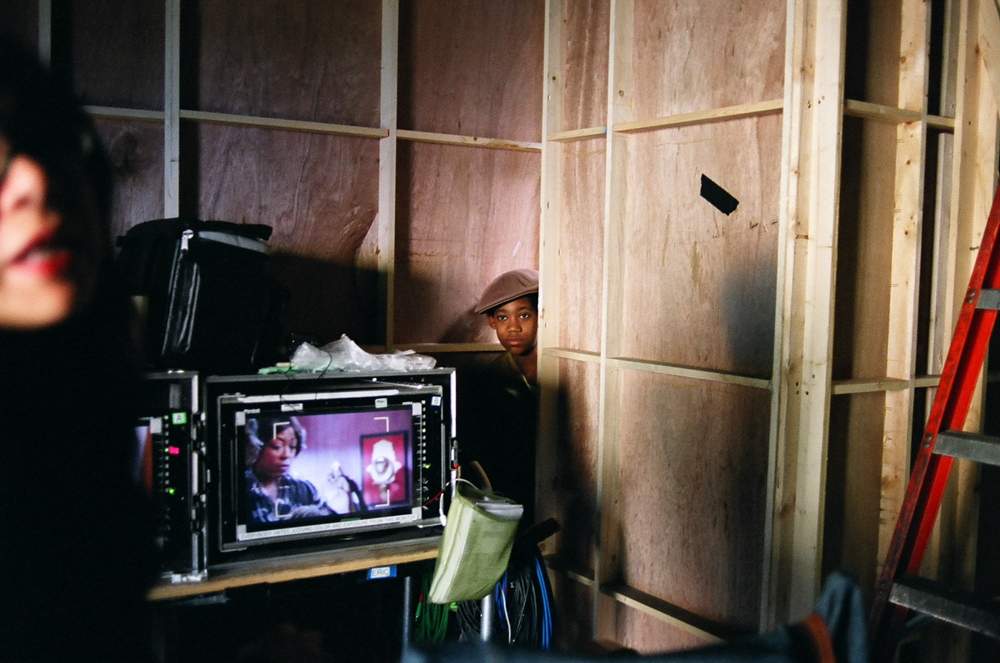
Behind the Scenes of the TV Show Everybody Hates Chris
Curator
Dr. Rotem Rozental, Los Angeles Center of Photography Executive Director and Chief Curator
Opening Reception
Thursday, April 2nd, 6pm-8pm @ LACP Headquarters, 252 S. Los Angeles St, Los Angeles, CA 90012
RSVP Here!
Exhibition Run Dates
April 2nd, 2026 – June 11th, 2025, 1st Floor Gallery, @ LACP Headquarters, 252 S. Los Angeles St, Los Angeles, CA 90012
About
Two decades had passed since the semi-autobiographical show Everybody Hates Chris first aired; two decades since it profoundly shifted the histories of sitcoms and the representation of Black lives in popular culture. Marking the anniversary, this exhibition delves into the private archive of Ali LeRoi, co-creator, director, producer, and writer, discovering never-before-seen moments he captured with his single-lens reflex camera behind the scenes; moments that chronicle shifts between illusions, fantasies, and real-life experiences, the shaping of collective cultural memory, and personal negotiations around idealized family structures—moments that harbor joy, pain, guilt, longing, shame, and love. So much love.
The title of the show speaks to the need and desire to let go of any signs of performativity; to dwell in the messiness of family life, set life, creative life, and share them without hesitation.
Loosely based on comedian Chris Rock’s life, Everybody Hates Chris was pivotal for the shaping of a new era on the small screen, of TV shows that catered specifically to black audiences. Rock and LeRoi infused the plotlines and the character design with references to their own family units, sometimes unconsciously. LeRoi sometimes surprised himself, discovering personal memories or manifestations of his mother or other family members in the physical embodiment of the set. There is a double exposure of illusions in these images – as LeRoi captured the goings-on of life on set, of the creative family formed between and during takes, he exhumed and articulated illusions that harbor fragments of memory and fiction, embodied by the physical presence of actors. It’s a world within a world, layered and complex, present but almost never fully realized.
Artist Statement
I struggle with memory, and photography has become my method of time travel. When I look at my photographs, moments resurrect themselves—suddenly I’m back in that space, my senses recalling details and sensations I thought were lost. These visits are brief. I know I can’t stay. But for that moment, I can remember who I was and understand why I’ve become who I am.
There’s a cruel irony in how I capture these moments. When shooting with a single lens reflex camera, the mirror that allows me to see through the lens must flip up during exposure, blocking my view at the precise instant the photograph is made. The moments you see pictured, I did not see when they occurred. I experienced them only after—in the darkroom, on the screen. Not even my memories are real.
These photographs document moments I never saw, inviting us to imagine what happened in my blindness.
The title “Everybody Hates Exhibitions” isn’t about the gallery walls or opening nights. It’s about the act of exposure itself—the discomfort of revealing what has been carefully held private. After twenty years of therapy, a divorce, surviving cancer and a pulmonary embolism, I’ve finally understood that silence is its own kind of death. These photographs mark the end of my silence about my own story, a story I’ve spent my entire adult life avoiding. The exhibition I resist isn’t the public display of images—it’s the unveiling of the self I’ve hidden behind the camera, the admission that I’ve been using other people’s stories as a proxy for my own.
Everybody Hates Chris was equal parts memory and invention—Chris recalling the trials that shaped him, me finding rhythms in a family I wasn’t part of but desperately needed. His family bore few similarities to my own, though the mother, Rochelle, was often informed by my own mother, Marilyn, in ways that surprised me as I worked. My father left when I was three. Or four. The precision got lost with him. Chris reveres his father, Julius—the only character given his true name, as if that reverence demanded authenticity the others could do without.
This was what made it easier for me to disappear into the invention, to photograph it as if it were my own family. There was space for me here that I hadn’t found in my own childhood. As a Black photographer documenting this particular kind of Black family story—one where the father stays, where love is complicated but present—I was both. The labor and the mending became inseparable.
Between takes, during rehearsals, in the quiet moments when the performance paused, I found what I was looking for. Not just images, but belonging. I was documenting the staging of memory, the performance of childhood, the careful construction of a family myth that felt more real than many actual families. The mundane backstage moments revealed what the scripted ones couldn’t—how small, daily acts make us family.
I occupied a space in this family that existed only because I was behind the camera. The camera gave me permission to be intimate, to be present, to witness the jokes and frustrations and quiet kindnesses that happen when people create something together. I was the family photographer, documenting our life together, even though our life together existed only during production.
When the show ended, the family broke apart. The children grew up, going on to their various careers. They’re doing fine. Julius, rest in peace, embodied by the great Terry Crews, went on to live another day, in another place, another time—like my father. But Rochelle, Tichina Arnold, remains my close friend to this day. You see, she reminds me of my mother. She even looks like her. In her, I found what I had been searching for without knowing I was searching—the maternal presence that stays, that doesn’t disappear when the cameras stop rolling.
I never told Chris that I love him for trusting me with his life, for letting me disappear into his family’s rhythm until I could find my own. Perhaps I never will. But these photographs are for him as much as they are for me. They document not just a television show, but the temporary family we built while making it—a family that existed in the spaces between action and cut, in the moments when we forgot we were performing—looking for something we couldn’t name until we found it.
And now they are for you, evidence that sometimes the families that save us are the ones we step into accidentally, camera in hand, blind at the moment of capture, finding our own story in the spaces where someone else’s pauses for breath.
Features
Ali LeRoi: Everybody Hates Exhibitions will feature the following FREE events and happenings:
- Opening reception on Thursday, April 2nd, 6pm-8pm @ LACP Headquarters, 252 S. Los Angeles St, Los Angeles, CA 90012. RSVP HERE
Price Sheet and Instructions for Purchasing Artwork
Download/view price sheet TO COME
Interested in purchasing artwork? Please email info@lacphoto.org and a representative will contact you ASAP. Thank you!