Erik Kessels
About
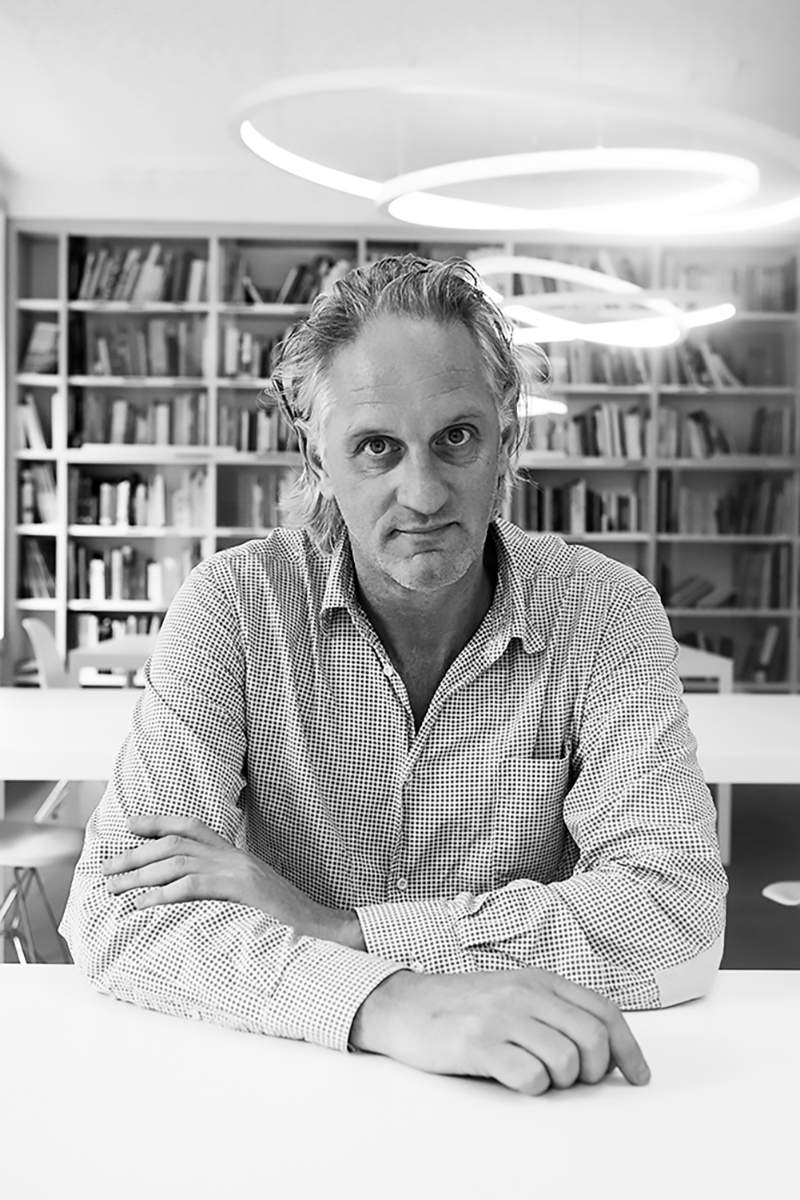
Erik Kessels is a Dutch artist, curator and communication designer, with great interest in art and photography. Erik Kessels is since 1996 Creative Partner of communications agency KesselsKramer.
Kessels is known for his experimental use of found photography. He re-appropriates and re-contextualises these images, creating new significance for materials that would otherwise be overlooked.
He has published over 100 books of his ‘re-appropriated’ images and has written the international bestseller Failed It! and Complete Amateur.
He has taught at several Art Academies (Amsterdam, Milan, Toronto, Lausanne, Düsseldorf).
Kessels made and curated exhibitions such as Loving Your Pictures, Mother Nature, 24HRS in Photos, Album Beauty and Unfinished Father. Currently he’s working on a long-term European art project called Europe Archive.
In 2010 Kessels was awarded with the Amsterdam Prize of the Arts, in 2016 nominated for the Deutsche Börse Photography Prize. Until 2022 his mid-career retrospective is shown in Turin, Düsseldorf and Budapest and he exhibited recently in the SFMOMA. He was called “a visual sorcerer” by Time Magazine and a “Modern Anthropologist” by Voque (Italia).
Scheduled to Teach
Gallery




LACP Interviews Erik Kessels
LACP asks Erik Kessels ten questions about their background, career in and beliefs about photography.
Los Angeles Center of Photography: What kind of photographer are you?
Erik Kessels: I don’t really see myself as a traditional photographer. I’m more of an image collector and storyteller. I work with found photography as much as with images I create myself. I’m interested in how images function in the world, how they’re used, misused, and interpreted, rather than just making “perfect” pictures.
LACP: How long have you been working with photography?
EK: I’ve been working with photography since the early 1990s, though my relationship with images started earlier through collecting and observing. It’s less about the act of shooting and more about engaging with photography as a medium over time.
LACP: Where did you get your training?
EK: I didn’t follow a strict photographic training path. My background is in advertising and visual communication. Much of what I’ve learned comes from practice, experimentation, and curiosity rather than formal technical education.
LACP: When did you know you wanted to devote your life to photography?
EK: It wasn’t a single moment. It developed gradually. I became fascinated by the power of images, how they shape perception and memory, and that curiosity kept growing until it became central to everything I do.
LACP: Did you ever come close to giving up?
EK: Not really giving up, but I’ve definitely questioned what I do. That’s part of any creative process. Doubt can actually be useful, it pushes you to rethink, evolve, and avoid becoming predictable.
LACP: Have you sacrificed anything by working with photography?
EK: A creative career is uncertain, but this is exactly what it should be. Constantly pushing yourself the a place that is unknown.
LACP: What have you gained by working with photography?
EK: A way of looking at the world. Photography has made me more observant and more aware of everyday details. It’s also given me the freedom to explore ideas and connect with people globally.
LACP: What classes do you teach at LACP?
EK: I’ve been teaching a program clled ‘Reservoir’ at LACP. Coaching and guiding emerging photographers for several month. The emphasis is less on technical perfection and more on developing ideas, editing, and storytelling.
LACP: What do you love most about teaching?
EK: The exchange of perspectives. Students often approach problems in unexpected ways, and that keeps things fresh. Teaching is not just about giving knowledge, it’s about creating dialogue.
LACP: What advice would you give someone who is thinking about making a career in photography?
EK: Don’t focus only on equipment or technique, focus on ideas. Be curious, collect, experiment, and don’t be afraid to fail. Also, understand that photography is a language; the more you engage with it, the more fluent you become. And most importantly, find your own voice rather than trying to imitate others.